Why Does My Heater Smell Like Burning When First Turned On?
Distinguish a brief dusty heating-startup odor from smoke, electrical burning or gas-like warnings. Learn which concerns need qualified equipment help.
Read More »
Heating & HVAC
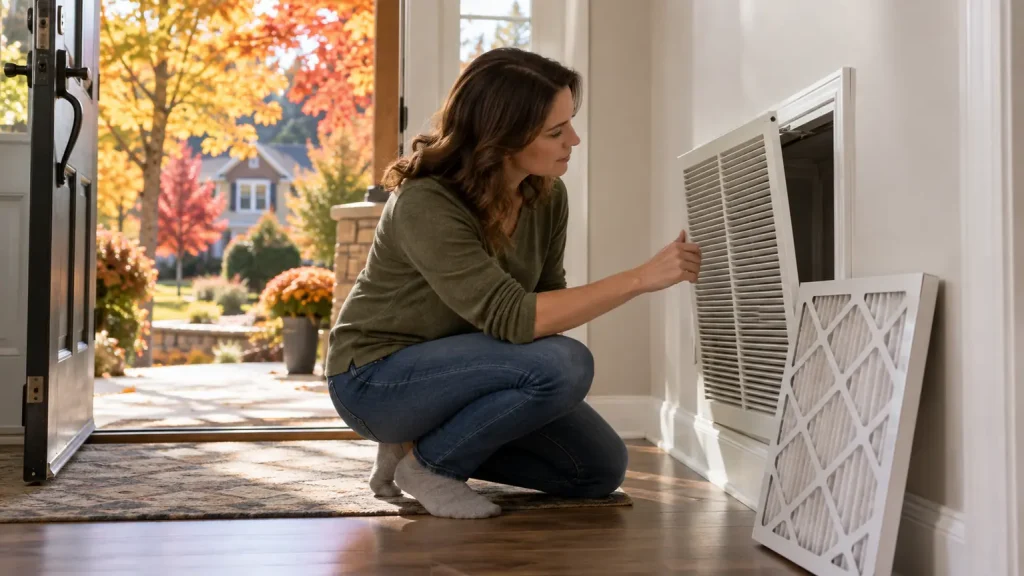
A fall HVAC checklist should help a Winston-Salem household identify maintenance needs before heating becomes routine. Start with safe visible checks and records, then leave equipment assessment to the appropriately qualified provider. The goal is a prepared system and a clear plan for unresolved concerns.
Find the last equipment service, filter information and any unresolved repair recommendation. Note renovations or water events since the previous heating season. Share that history with the technician rather than restarting the assessment from a vague complaint.
Use the manufacturer instructions for size, installation and replacement. Examine the filter only where access is permitted and safe. Ask about equipment compatibility before buying a different filtration type.
Move ordinary furniture or stored items that obstruct openings when you can do so safely. Clean appropriate visible surfaces without reaching into unfamiliar ductwork. Damaged grilles or uncertain material should be reported rather than disturbed.
Ask the provider to address heating-system maintenance within their qualifications and the manufacturer requirements. Duct cleaning does not substitute for combustion, electrical or mechanical assessment. Keep the service boundaries clear.
A persistent burning, plastic-like or gas-like odor needs appropriate attention. Smoke, fire, an alarm or immediate danger calls for leaving the unsafe area and seeking emergency help from safety. Do not repeatedly cycle a concerning system to test it.
Where documented debris or a specific contamination concern exists, discuss an air-pathway inspection. Do not add cleaning to every fall visit by default. Record the reason, included components and any separate repair need.
Review manufacturer and local emergency guidance for alarms and safe equipment use. Make sure other occupants know about a restricted system or pending repair. Keep the maintenance record available as you prepare HVAC for winter.
Before approving work, describe the problem, ask what inspection can establish and request the service boundaries in writing. Keep the findings with the property maintenance record so follow-up addresses the same issue. For a non-emergency discussion, contact Brookstown Duct Cleaning at (336) 817-0075 and review the relevant service. Resolve urgent safety concerns through the appropriate emergency or qualified equipment help first.
Records, specified filter maintenance, clear openings, qualified service and a plan for concerns.
No. Tie cleaning to documented conditions and inspection.
Stay within safe manufacturer-permitted maintenance and use qualified help for unfamiliar equipment work.
Follow the equipment and filter instructions and account for observed loading.
Treat it as an equipment concern; stop safely when appropriate and arrange qualified assessment.
Leave the unsafe area and seek appropriate emergency help from safety.
Keep accessible openings unobstructed according to system guidance.
No. Equipment maintenance and duct debris removal have separate scopes.
Last service, repairs, filter details, renovation activity and moisture events.
Resolve documented concerns, keep records and ensure occupants understand safe use and any restrictions.
Talk to a locally owned Winston-Salem team for a clear quote and a thorough, clean job.
Distinguish a brief dusty heating-startup odor from smoke, electrical burning or gas-like warnings. Learn which concerns need qualified equipment help.
Read More »Explore burning smell when heat is on with practical checks, clear service limits and 10 FAQs for Winston-Salem homeowners.
Read More »A plastic or electrical burning smell needs appropriate equipment assessment. Learn when to stop operation, leave an unsafe area and…
Read More »