How Many House Fires Are Caused by Dryers? (NFPA Stats Explained)
Understand dated NFPA dryer-fire estimates, why washer totals differ and how to use statistics without presenting historical figures as 2026…
Read More »
Heating & HVAC
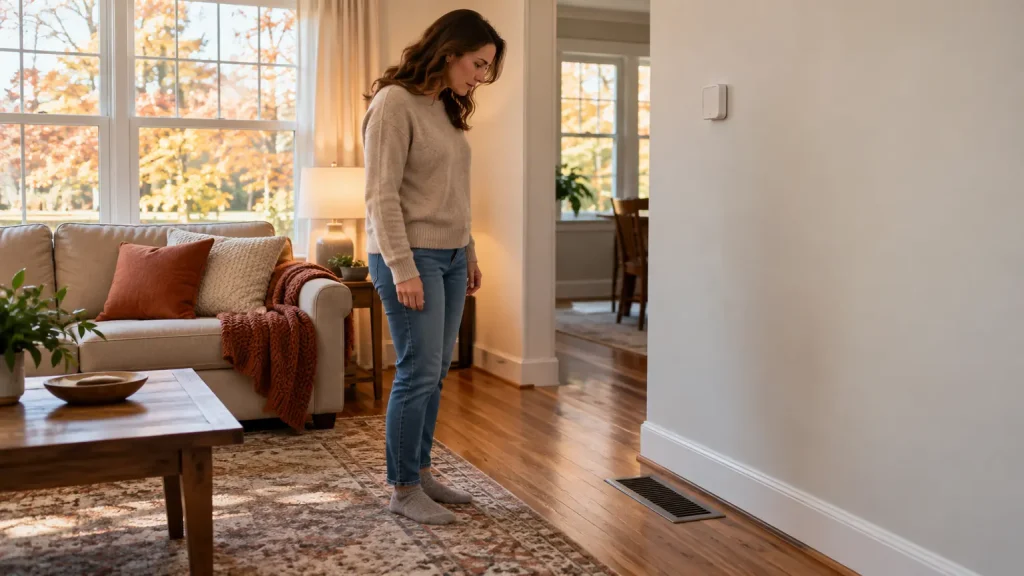
The first heating cycle after months of limited use can draw attention to an unfamiliar smell. A brief warm-dust odor is different from smoke, a plastic or electrical burning odor, or a smell that persists and intensifies.
Do not decide that every heater burning smell is dust in the ducts. The odor's character, duration and accompanying equipment behavior matter, and safety concerns need the appropriate qualified response.
Smoke, visible fire, a gas-like smell or a carbon monoxide alarm should not be treated as ordinary startup dust. Leave an unsafe area and follow the alarm, utility, emergency dispatcher and responding professionals' instructions.
Do not run repeated cycles to see whether an alarming odor will disappear. Do not open electrical or combustion compartments to investigate it yourself.
For an abnormal burning odor without an active emergency, stop operation using accessible normal controls if doing so is safe, and arrange qualified equipment assessment. Do not approach smoke or exposed electrical hazards to reach a control.
Settled material warming during initial operation can produce a temporary dusty smell. The important observation is whether it weakens rather than repeats at the same strength or becomes more concerning.
This description should not be used to dismiss uncertainty. If the odor is difficult to identify, persistent or accompanied by unusual behavior, ask an appropriate HVAC professional instead of assuming it is harmless.
Note when heat was last used, when the odor begins and whether it affects one room or the entire home. Record unusual sounds, repeated shutdowns or alarms.
Do not make an odor test by deliberately restarting a concerning system. Use observations already available and let the equipment professional determine what testing is appropriate.
If there are no urgent warnings and the manufacturer's maintenance procedure is clear, review accessible filter fit and condition. Note whether supply and return openings are obstructed.
These checks do not establish the condition of electrical components or combustion equipment. A clean filter is not evidence that a burning odor is safe, and surface dust is not a diagnosis of the whole duct system.
Heating startup is primarily an equipment operation event. A duct-cleaning recommendation needs its own evidence, such as identified debris in the air pathway, rather than the smell alone.
Ask the HVAC provider to explain any mechanical, electrical or combustion finding. If a separate air-pathway concern is documented, discuss that scope after appropriate safety and equipment issues are addressed.
Keep equipment instructions, alarm guidance and maintenance contacts available before the heating season. Record any concern and the resulting assessment so a recurring smell can be compared with earlier findings.
For non-emergency questions about residential air duct cleaning, call Brookstown Duct Cleaning at (336) 817-0075. Cleaning should not be presented as a substitute for qualified heater diagnosis.
A temporary dusty odor is one possibility, but other causes can need equipment assessment. Character, persistence and accompanying warnings matter more than the season alone.
No. Smoke, electrical or plastic burning, gas-like odors, alarms and abnormal behavior should not be dismissed as ordinary settled dust.
Do not repeatedly operate a concerning system. Use available observations and let a qualified equipment provider determine the appropriate assessment.
Prioritize safety, leave an unsafe area and contact emergency services as appropriate. Do not approach or dismantle equipment to investigate.
Do not enter electrical or combustion compartments for an odor investigation. Use qualified equipment assistance and follow manufacturer safety instructions.
No. Filter condition does not establish electrical, mechanical or combustion safety. An abnormal burning odor still deserves the appropriate response.
No. Heating equipment and other sources may be involved. A duct-cleaning scope requires evidence beyond the odor alone.
Explain the timing, smell character, affected rooms, alarms and unusual behavior. Mention when the equipment was last used without conducting risky restart tests.
Arrange qualified assessment rather than labeling it a one-time startup event. Recurrence changes the reason for evaluation.
Use emergency or qualified HVAC help as appropriate first. Brookstown's (336) 817-0075 line can discuss separate non-emergency duct-cleaning concerns.
Talk to a locally owned Winston-Salem team for a clear quote and a thorough, clean job.
Understand dated NFPA dryer-fire estimates, why washer totals differ and how to use statistics without presenting historical figures as 2026…
Read More »Understand dryer lint and exhaust concerns, recognize warning signs and learn why cleaning, repairs and safe appliance use all belong…
Read More »If a dryer fire occurs, prioritize leaving safely and calling 911. Learn what to avoid and which assessments are needed…
Read More »