How Many House Fires Are Caused by Dryers? (NFPA Stats Explained)
Understand dated NFPA dryer-fire estimates, why washer totals differ and how to use statistics without presenting historical figures as 2026…
Read More »
Heating & HVAC
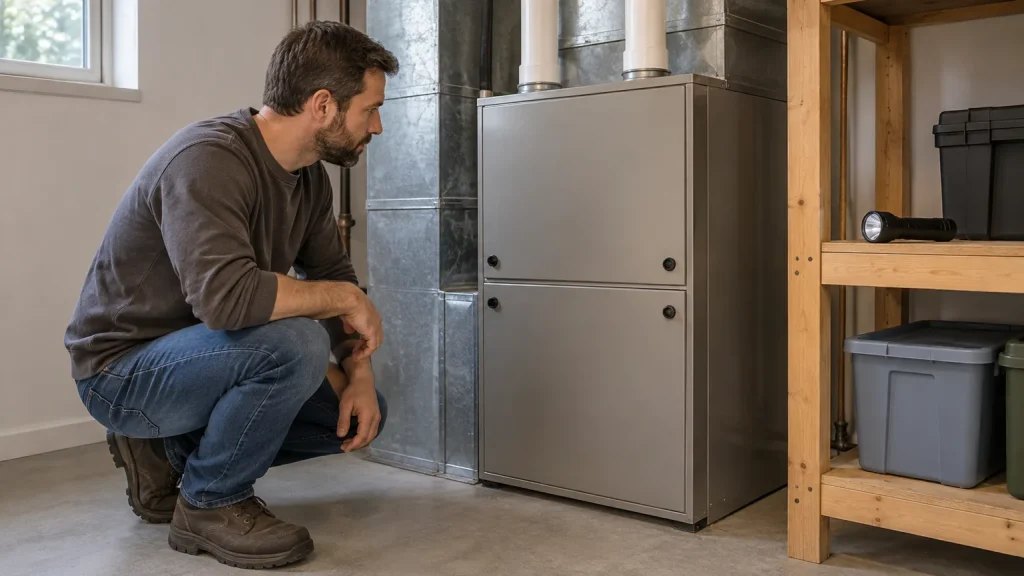
A heater that smells like burning plastic should not be explained away as routine dust without an appropriate assessment. Stop treating the concern as a duct-cleaning question and prioritize equipment safety.
If there is smoke, fire, an alarm or immediate danger, leave the unsafe area and call emergency services as appropriate from a safe location. Do not approach hazardous equipment to inspect the source.
If there is no immediate danger and normal controls are safely accessible, stop the equipment using those controls and arrange qualified HVAC assessment. Do not expose yourself to heat, smoke, a gas-like odor or damaged electrical parts to reach a switch.
Do not restart the system to confirm the odor. A second test cycle can be a poor way to gather information about an uncertain equipment concern.
Report that the smell resembles hot plastic or electrical burning, rather than simply saying the house smells unusual. Explain where it was noticed and whether it began with heating operation.
Record any smoke, unusual sounds, shutdowns or alarms already observed. Do not open cabinets, remove insulation or touch wiring to obtain a more detailed description.
An odor noticed when heat begins gives the technician useful context. It does not identify which material or component is responsible. Avoid labeling the source from a smell comparison alone.
An air freshener does not address an equipment fault. Spraying a product into a vent can mask the clue while leaving the concern unresolved.
Similarly, changing a filter or wiping a grille is not proof that the equipment is safe to restart. Those maintenance tasks have a separate scope from a burning-odor assessment.
An HVAC professional should assess heating-equipment concerns and identify when an electrical or other specialist is needed. Follow the equipment manufacturer's safety instructions and any responder guidance.
A duct-cleaning company should not be expected to diagnose or repair every electrical, mechanical or combustion issue. Ask for the service boundary to be clear so an unsuitable appointment does not delay the right assessment.
In a rental or shared building, report the concern promptly to the responsible property manager while following urgent safety instructions. Explain which unit or zone is affected and whether equipment use has been stopped.
Do not leave a restricted or concerning system available for another occupant to restart without knowing about the issue. The responsible provider should document the assessment and any limits on use.
Keep the inspection and repair information with the maintenance record. Ask what was found, what was corrected and whether any follow-up remains.
For a separate non-emergency concern about documented air-pathway debris, discuss residential air duct cleaning with Brookstown Duct Cleaning at (336) 817-0075. An odor suggesting burning plastic belongs first with appropriate safety and equipment help.
Treat it as an equipment-safety concern. Stop operation through safely accessible normal controls when appropriate and arrange qualified assessment; leave and seek emergency help if there is immediate danger.
Do not assume that. A plastic or electrical burning description is different from a mild dusty odor and needs an appropriate equipment review.
No. Do not conduct repeated test cycles on a concerning system. Report observations already available to the qualified provider.
Do not investigate unfamiliar electrical or heating compartments yourself. Keep the assessment with an appropriately qualified professional.
No. Fragrance can mask the clue without addressing an equipment defect. Avoid improvised products inside the air pathway.
Filter maintenance is not an equipment-safety clearance. Follow the qualified assessment and manufacturer or responder guidance before resuming use.
Leave the unsafe area and call emergency services as appropriate from safety. Do not delay to inspect, unplug or protect the equipment.
Follow urgent safety instructions first, then inform the responsible property manager. Identify the unit or zone and any restriction on equipment use.
Ask what was found, corrected and recommended for follow-up. Keep any use restrictions and completion information with the property maintenance record.
No. Resolve the safety and equipment concern first. Brookstown at (336) 817-0075 can discuss separate documented duct-cleaning needs afterward.
Talk to a locally owned Winston-Salem team for a clear quote and a thorough, clean job.
Understand dated NFPA dryer-fire estimates, why washer totals differ and how to use statistics without presenting historical figures as 2026…
Read More »Understand dryer lint and exhaust concerns, recognize warning signs and learn why cleaning, repairs and safe appliance use all belong…
Read More »If a dryer fire occurs, prioritize leaving safely and calling 911. Learn what to avoid and which assessments are needed…
Read More »