How to Clean Return Air Vents Safely
You can clean a safely accessible return air vent by switching the system off using its normal controls, removing loose…
Read More »
Post-Construction Cleanout
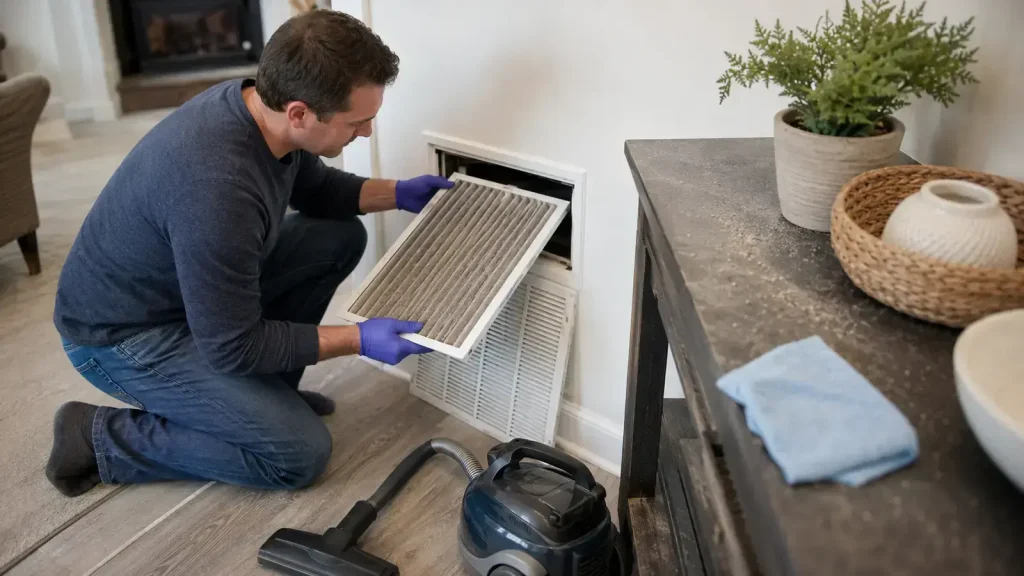
You may expect your home or building to stay cleaner once heating or cooling demand eases. The HVAC system runs less, air moves through the ducts less often, and the busiest part of the season appears to be over.
Yet this is often when dust suddenly becomes more noticeable on furniture, floors, return grilles, electronics, and register covers.
That pattern can seem backward. In reality, reduced HVAC operation changes both filtration and particle movement. Dust is still entering and being created indoors, but the system may spend less time pulling airborne particles through its filter.
Seasonal pollen, renovation residue, pets, tenant turnover, open doors, humidity changes, and months of heavy heating or cooling can add to the problem.
Across older homes, suburban properties, mixed-use districts, commercial corridors, rentals, and multi-tenant buildings, the useful question is not simply whether the ducts are dirty. It is where the dust is coming from and why it keeps returning.
Reduced cycling changes how often indoor air passes through the HVAC filter, even though everyday sources continue producing and disturbing dust.
A forced-air HVAC filter cannot capture particles while the blower is idle. The EPA explains that HVAC filters filter air only while the system is operating.
During periods of heavy heating or cooling, longer operating cycles repeatedly move room air back through the return system and filter. When mild conditions arrive and the system runs less, that passive filtration drops.
Dust production does not stop at the same time. Walking across carpet, opening exterior doors, making beds, handling laundry, allowing pets indoors, moving boxes, and operating ceiling fans can continue releasing particles.
Dust that has already settled can return to the air without HVAC help. Foot traffic, vacuuming, fans, children, pets, maintenance work, deliveries, and normal commercial activity can disturb particles repeatedly.
Short HVAC cycles may then move some of that airborne material before shutting off again. If you are noticing this pattern after a long cooling or heating season, the same clues discussed in signs your ducts need attention after heavy AC use can help separate surface dust from an HVAC-related pattern.
Filter condition, fit, and compatibility are often the fastest places to investigate when indoor dust suddenly becomes more visible.
A filter that is overloaded with dust can restrict airflow. A filter with gaps around its edges can also allow some air to bypass the filter media.
The Department of Energy’s filter guidance emphasizes proper filter installation and notes that dirty filters can reduce airflow. Follow your HVAC equipment manufacturer’s instructions for filter size, type, and replacement.
Do not automatically install the highest-rated filter you can find. Some systems may not accommodate additional airflow resistance without professional evaluation.
Heavy dust on return grilles can reveal where airborne material is being pulled toward the HVAC system. Vacuum accessible grille surfaces carefully and check whether furniture, stored items, curtains, or other objects restrict airflow.
If dust visibly returns around registers soon after normal cleaning, a closer evaluation of the residential air duct cleaning pathway may be reasonable. Visible evidence matters more than assuming every dusty property needs duct cleaning.
Changing outdoor conditions and property routines can add new particles, just as HVAC filtration time starts decreasing.
Pollen, soil, and fine outdoor debris enter through doors, clothing, shoes, pets, deliveries, equipment, and open windows. These particles can accumulate in carpets, entry mats, upholstery, and return-air areas.
The seasonal steps used for reducing indoor allergen reservoirs also work as practical dust-control measures.
Damp dusting, careful vacuuming, entry control, filter checks, and cleaning around registers reduce material available for repeated disturbance.
Drywall sanding, flooring work, insulation disturbance, cabinet installation, demolition, and general remodeling can generate fine particles that migrate well beyond the immediate work zone.
The visible construction mess may disappear while material remains around returns, registers, mechanical closets, and inaccessible air pathways. A post-construction dust cleanout becomes particularly relevant when powdery debris starts appearing again after HVAC operation.
Patterns tied directly to HVAC operation provide stronger evidence than ordinary dust on shelves or floors.
Watch for several signs appearing together:
Air duct cleaning addresses material in the duct and vent pathway. It cannot stop every source of household dust, seal leaking ducts, repair damaged components, correct humidity problems, or remove particles already embedded in carpet and fabrics.
If dust repeatedly appears near registers after basic cleaning, filter checks, and source control, a professional duct inspection can help determine whether buildup inside the air pathway is contributing.
A few safe observations can narrow the cause and help you avoid treating the wrong problem.
For properties with uneven rooms as well as recurring dust, consider whether the problem could involve airflow rather than cleanliness alone. Uneven room airflow and duct cleaning require different decisions when crushed ducts, leaks, dampers, return paths, or HVAC equipment are involved.
Laundry lint and HVAC dust involve different airflow systems, so each needs its own inspection and maintenance decisions.
A dusty building does not automatically mean the dryer vent is restricted. However, property turnover and seasonal maintenance are useful times to check both systems independently.
Warning signs such as longer drying cycles, abnormal dryer or laundry-room heat, visible lint near the exterior exhaust, repeated shutdowns, or a burning smell deserve attention. Stop using the appliance if you notice smoke, sparking, or a burning smell.
Professional dryer vent cleaning addresses lint and debris inside the exhaust pathway. It does not replace appliance, electrical, gas-system, or fire-safety diagnosis when those problems are suspected.
Recurring dust is easier to control when you identify how particles enter, settle, become airborne, and move through the building.
Less HVAC cycling does not necessarily create more dust. It can make existing dust easier to notice because the system spends less time filtering circulating air.
Start with the filter, accessible returns, registers, cleaning habits, entry points, and recent renovation or turnover history. Then compare those findings with the timing of HVAC operation.
When dust repeatedly releases from vents or visible debris extends into the air pathway, duct cleaning may deserve consideration.
When the evidence instead points to leaks, damaged ductwork, mechanical problems, moisture, or unusual odors, involve the appropriate HVAC, building-performance, restoration, remediation, electrical, or other qualified professional.
Your HVAC filter only captures particles when air moves through the system. When heating or cooling demand drops, the system may spend less time filtering indoor air. Meanwhile, people, pets, doors, fabrics, and outdoor particles continue producing and disturbing dust.
Not directly. Reduced cycling can reduce the amount of air passing through the filter, which may allow airborne particles to remain indoors longer. Dust sources such as carpets, clothing, pollen, pets, construction residue, and foot traffic continue regardless of HVAC runtime.
Not always. Dust around a register can come from room air, nearby surfaces, filter problems, or material inside the air pathway. Repeated dust release when the blower starts or visible debris beyond the register provides stronger evidence that the ductwork should be inspected.
Checking the filter is a sensible first step. Look for heavy loading, damage, incorrect installation, or gaps around the filter. Follow your equipment manufacturer’s instructions rather than automatically installing a higher-efficiency filter that the system may not be designed to handle.
Air duct cleaning can remove accumulated material from the duct pathway when buildup is present, but it cannot eliminate every indoor dust source. Carpets, clothing, pets, open doors, outdoor soil, renovation residue, and ordinary occupancy can continue producing dust after cleaning.
Fine drywall, flooring, insulation, and construction particles can settle in less accessible areas. Material may remain around returns, registers, mechanical spaces, or duct pathways after visible surfaces have been cleaned. Note whether powdery dust reappears specifically when the HVAC system runs.
Yes. Air that moves around a filter instead of through the filter media does not receive the intended filtration. Check that the filter is the correct size, sits properly in its slot, and is installed according to the equipment manufacturer’s directions.
Continuous fan operation increases the amount of air passing through the filter, but it is not the right choice for every system or property. It can affect electricity use and system operation. Ask a qualified HVAC professional whether continuous or extended fan operation makes sense for your equipment.
Look for repeated dust around the same registers, rapidly loading return grilles, visible debris inside vents, recent renovation work, and complaints that coincide with HVAC operation. Document conditions by unit or zone so you can distinguish isolated housekeeping issues from a recurring building-system pattern.
Humidity can influence how particles behave and how comfortable or stale indoor spaces feel, but unusual humidity may also indicate an HVAC or building-envelope issue. Avoid treating duct cleaning as a moisture solution. Persistent moisture, wet materials, or suspected microbial growth deserve qualified evaluation.
Usually not. Dryer exhaust and HVAC air distribution are separate systems. Dryer lint buildup should be evaluated when drying times increase, the appliance becomes unusually hot, lint accumulates near the exhaust, or other airflow warning signs appear.
Talk to a locally owned Winston-Salem team for a clear quote and a thorough, clean job.
You can clean a safely accessible return air vent by switching the system off using its normal controls, removing loose…
Read More »Furnace duct cleaning removes suitable deposits from the household air pathways connected to a forced-air heating system. It is different…
Read More »There is no single air duct cleaning schedule that fits every home. The useful question is whether the current condition…
Read More »