UV Light for HVAC: Is It Worth It?
Explore uv light for hvac with practical checks, clear service limits and 10 FAQs for Winston-Salem homeowners.
Read More »
Duct Sanitization
A humid summer can make homeowners pay closer attention to damp or musty conditions as the system changes to heating. That seasonal timing does not itself confirm mold in AC ducts.
The useful task is to connect the current observation with cooling-season moisture and property history. Then choose the appropriate source correction, material assessment and service sequence.
Record equipment drainage trouble, known leaks, wet insulation and persistent smells. Identify when the concern first appeared, which rooms were affected and whether any repair was completed.
Keep an unfinished moisture report from disappearing when the thermostat changes modes. Heating startup can make a previous issue more noticeable, but it does not change which leak, drain or material needs attention.
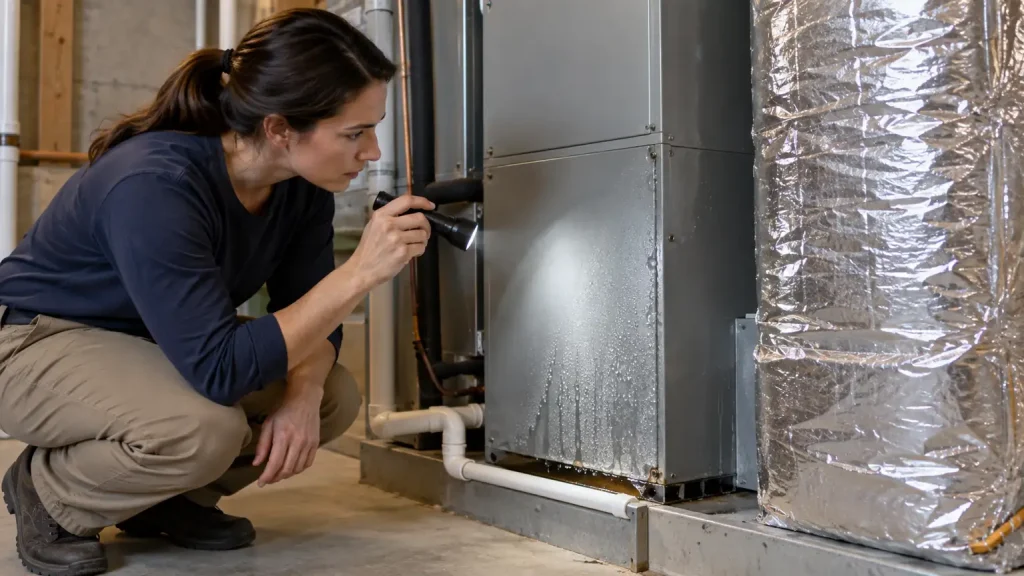
Describe visible material without assuming its identity. A musty odor, dark residue or photograph should not be used alone to confirm mold.
Ask the assessor which component is affected and what evidence supports the description. If the condition is uncertain, the written recommendation should retain that uncertainty rather than immediately prescribe a universal treatment.
Equipment areas, nearby building materials and adjacent spaces can all deserve review. An HVAC provider may need to address drainage or equipment operation, while a building specialist may need to correct a roof, plumbing or crawlspace condition.
Cleaning cannot complete those repairs. Ask who is responsible for the moisture source and how that task will be documented before considering the rest of the work finished.
A single affected room or branch needs a location-specific assessment. It should not automatically become proof that every duct run requires the same treatment.
Ask whether the affected section is bare metal, flexible or internally lined. Wet or damaged porous material may need a different decision from a reachable hard surface.
The provider should explain when cleaning is suitable and when replacement or repair is more appropriate. The word antimicrobial does not replace that material assessment.
Request the product, intended purpose and relevant limitations. Do not authorize household sprays or an improvised mixture inside vents. Ask how the method fits the material and observed condition.
A treatment should not serve as a fragrance cover-up or a substitute for correcting ongoing moisture. If the smell returns, review the source and earlier work rather than immediately purchasing another application.
Save inspection photographs, moisture repairs and component-specific service information. Track the original odor pattern and any recurrence after work.
For a discussion of duct sanitization and its appropriate limits, call Brookstown Duct Cleaning at (336) 817-0075. Explain the summer history and ask whether cleaning, material replacement or another professional service comes first.
No. Seasonal humidity provides context, not a diagnosis. The observed material, component and moisture history need an appropriate assessment.
The air pathway and existing conditions can remain relevant after the thermostat changes modes. Review earlier reports instead of assuming heating created a new contamination problem.
No. Record the pattern and possible moisture sources, but do not treat smell alone as confirmation of a substance.
Keep leak reports, equipment drainage findings, photographs, repairs and dates. They help connect the current observation with a known condition.
It does not replace drainage or equipment repair. Ask the appropriate HVAC provider to assess and correct the source.
Not automatically. Ask which components were actually inspected and why the proposed scope extends beyond the local finding.
Material construction and condition change the suitable service. Wet or damaged porous sections should not be treated like every hard surface by default.
Do not improvise chemical treatment. Product suitability and source correction require an appropriate plan for the specific material and condition.
Review the original source, repairs and affected location. Recurrence can indicate that a relevant cause remains unresolved.
Call (336) 817-0075 with the summer history and findings. Ask which source-focused assessment and duct-service sequence fits the situation.
Talk to a locally owned Winston-Salem team for a clear quote and a thorough, clean job.
Explore uv light for hvac with practical checks, clear service limits and 10 FAQs for Winston-Salem homeowners.
Read More »Learn what vent photos can and cannot reveal about suspected mold, how to document moisture clues and when an appropriate…
Read More »Learn how suspected mold in air ducts should be evaluated, why moisture correction matters and when material assessment or professional…
Read More »