How Many House Fires Are Caused by Dryers? (NFPA Stats Explained)
Understand dated NFPA dryer-fire estimates, why washer totals differ and how to use statistics without presenting historical figures as 2026…
Read More »
Dryer Vent Cleaning
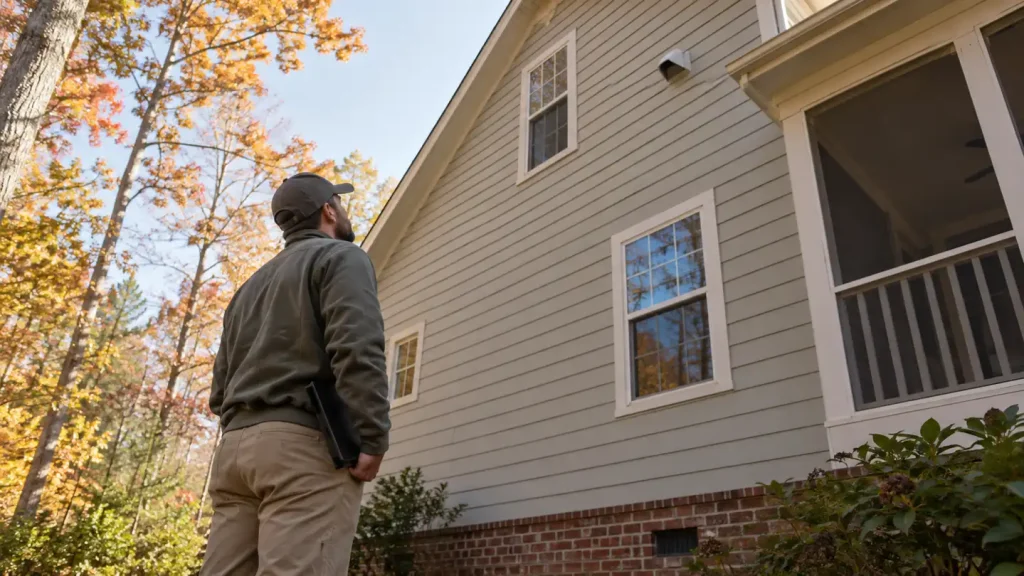
A dryer exhaust that travels through several concealed spaces is different from a short, accessible wall connection. The route may include turns, elevated outlets and sections you cannot inspect from either end.
For Winston-Salem homeowners, the main concern is not whether a brush can enter the opening. It is whether the full line can be assessed, serviced without damage and checked afterward.
Identify the laundry-room location and visible exterior termination. Keep any builder documentation, previous photographs or service records that describe the route.
Do not assume the nearest outdoor grille belongs to the dryer. Buildings can have several exhaust openings. If the connection cannot be confidently identified, ask for an assessment before inserting equipment.
An exterior opening may look close to the appliance while the internal route takes several turns. Finished walls and ceilings can hide that arrangement. Describe uncertainty honestly rather than guessing a length to obtain a quick quote.
A tool can stop before a turn, enter a damaged section or fail to show whether the line remains properly connected. You may remove some lint without addressing the entire path.
Do not force a brush because a video demonstrates a similar-looking installation. The route and materials inside your building may differ. If resistance or tool location becomes uncertain, stop the attempt.
Cleaning is also different from repairing a defect. A line that is crushed, disconnected or incorrectly installed needs appropriate correction. Repeating brush passes does not replace that work.
Elevated work introduces access concerns beyond the cleaning method. Do not climb onto a roof or use an improvised ladder arrangement to reach a termination.
Explain the height and location when requesting service. Ask whether that access is included and what the provider needs from you. A ground-level photograph showing the whole elevation can be more useful than trying to reach the opening yourself.
An upper-floor appliance may sit in a closet with limited clearance. Moving it without a plan can affect the transition connector or nearby utility connections.
Tell the contractor whether the machine is stacked or gas-connected. Keep fuel and appliance handling separate from assumptions about duct-cleaning skills. Appropriate qualifications and access should match the specific work required.
The service description should identify the route and any limitations. Ask what was inspected, which areas were cleaned and whether unresolved defects remain.
Do not accept removed lint alone as the complete account of a complicated line. The condition of connectors and termination matters as well. If an outlet remains damaged or a concealed section is uncertain, the contractor should explain the next step.
Save the route description after the first thorough assessment. Record access requirements, maintenance dates and any repairs. This makes future appointments easier to plan and helps distinguish a new restriction from an unchanged installation defect.
For dryer vent cleaning on a long or elevated route, call Brookstown Duct Cleaning at (336) 817-0075. Explain what you know about the pathway and ask for a service scope that accounts for both access and condition.
It may not adequately address every concealed turn or reveal damaged connections. Removing some lint does not demonstrate that the entire exhaust route was assessed.
No. Length does not solve uncertainty about route, material or condition. Stop if a tool meets resistance or its position inside the line is unclear.
Do not treat rooftop work as ordinary homeowner maintenance. Ask a provider to plan appropriate access and identify whether that access is included in the proposal.
Builder documentation, earlier service photographs and a clearly identified outdoor termination can help. Explain any uncertainty instead of estimating a hidden path as a fact.
It can affect both appliance access and outdoor termination access. Mention tight closets, stacked equipment and utility connections before the appointment.
No. An appropriate repair needs to restore the connection and address the defect. The quote should distinguish corrective work from debris removal.
Tell the provider the location and height. A safely taken photograph can help plan access without requiring you to approach the opening.
Ask for more context. The contractor should explain which route was serviced, what condition was found and whether connectors or termination need additional work.
Save the route description, findings, access requirements and repairs. Those records help investigate recurring symptoms and compare future service scopes.
Call (336) 817-0075 and describe the upper-floor, roof or long-run arrangement. Ask how the proposed service will assess the complete route safely.
Talk to a locally owned Winston-Salem team for a clear quote and a thorough, clean job.
Understand dated NFPA dryer-fire estimates, why washer totals differ and how to use statistics without presenting historical figures as 2026…
Read More »Plan dryer vent maintenance using manufacturer guidance, laundry use, route condition and warning signs. Learn what a useful service record…
Read More »Understand dryer lint and exhaust concerns, recognize warning signs and learn why cleaning, repairs and safe appliance use all belong…
Read More »