What’s Included in Post-Construction Cleaning (and Why Ducts Get Skipped)
Explore what is included in post construction cleaning with practical checks, clear service limits and 10 FAQs for Winston-Salem homeowners.
Read More »
Post-Construction Cleaning
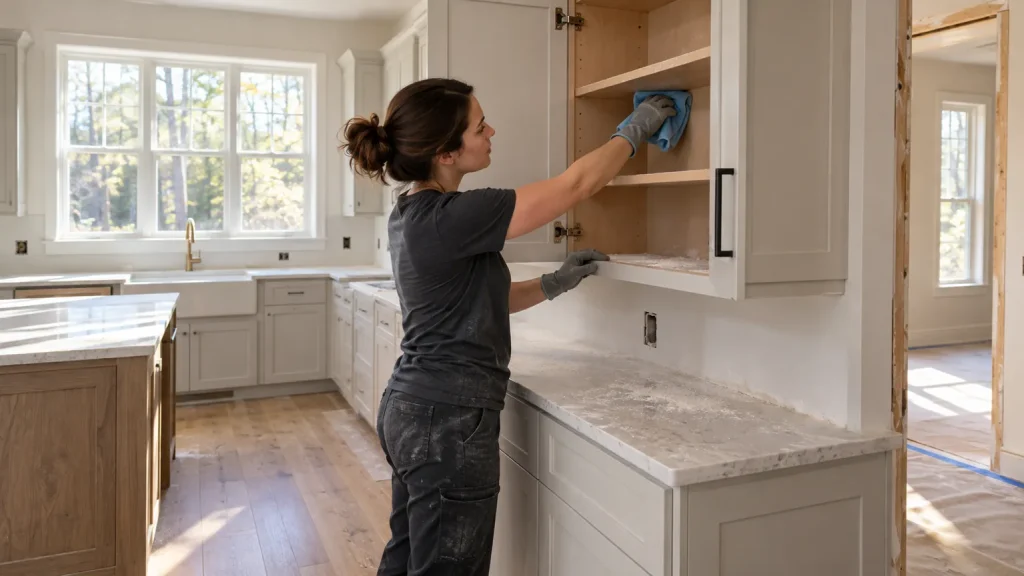
The cost of post-construction cleaning depends on what the contractor means by finished. A room can look ready for move-in while dust remains on ledges, inside cabinets, behind appliances or in an unprotected air pathway.
For Winston-Salem homeowners and project managers, the first step is to separate general building cleanup from specialized HVAC work. A clear division makes the estimate easier to compare and helps avoid paying for work that was never included.
Floor area helps describe the project, but construction type and site condition matter. A freshly painted room with protected finishes differs from a full remodel with sanding, cutting, adhesive residue and stored building materials.
Tell the estimator whether the property is vacant, partially occupied or still being worked on. A final clean performed before trades finish may need to be repeated. The quote should explain whether the service is a rough cleanup, final detailed clean or a later touch-up.
No confirmed Brookstown price for general post-construction cleaning is supplied here. The linked service concerns post-construction cleanout; ask the company to confirm the specific scope it can provide.
This stage can involve removing loose debris, packaging and obvious site dust after major work. It should not be confused with a detailed move-in clean. Agree on who removes construction waste and whether hauling is included.
The proposed list might include reachable ledges, trim, cabinets, doors, hard floors and interior glass. Specify both the surface and the acceptable result. Removing dry dust is different from removing paint, grout residue or cured adhesive without harming a finish.
If returns were left open during demolition or sanding, the HVAC system may require an inspection. A building cleaner wiping register faces does not necessarily inspect or clean branches and trunks. Keep that assessment distinct from the general surface-cleaning estimate.
Access to high ceilings, occupied rooms, delicate flooring and built-in furniture can affect the plan. So can the amount of fine dust left by sanding or the need to protect newly installed finishes.
Discuss whether water and power are available, whether another trade will still be on site, and who is responsible for moving stored materials. If the cleaner arrives to a blocked room or active work area, the original assumptions may no longer fit.
Unusual residues should be identified before a product is selected. Ask the installer for care instructions for stone, wood, coatings and specialty surfaces. A stronger chemical is not automatically a better way to finish a construction project.
Request an itemized list with areas included, exclusions and any return visit. Use the same completion date and property description when contacting more than one provider.
A comparison checklist can include:
The cheapest offer may cover only a light surface pass. A more complete offer may still be wrong if it includes tasks your building already received. Comparing phases prevents both misunderstandings.
Arrange the final sequence carefully. Dust-producing work should be complete before detailed cleaning begins. Ask the project manager to confirm that exposed returns and duct openings are protected during any remaining work.
If HVAC equipment was operated during a dusty stage, report that history during an air-duct inspection. Visible residue alone does not tell the contractor how far material traveled, but the timing can help identify where to inspect.
Do not use a room vacuum to explore concealed ducts, and do not apply products inside vents to create a freshly cleaned smell. Those actions can hide clues or create a separate cleanup problem.
Before work starts, agree on what will be checked at handoff. Choose representative cabinets, ledges, floor areas and accessible grilles, then review them with the contractor.
Photographs and an agreed list make it easier to identify unfinished work without inventing a universal spotless standard. If dust reappears because another trade resumes sanding, document the new event rather than assuming the earlier clean failed.
For questions about construction-related air-pathway debris, call Brookstown Duct Cleaning at (336) 817-0075. Explain the work completed and ask whether inspection or post-construction cleanout fits the evidence.
The total depends on project condition, scope and access. Request a phase-specific quote rather than relying on floor area alone or assuming that a surface-cleaning package includes concealed ducts.
No. Rough cleanup addresses loose debris and obvious site material. A final clean should describe detailed surface tasks and the condition expected before occupancy.
Only if explicitly listed. Cleaning a grille or the surrounding wall does not establish that branch ducts, trunks or equipment interiors were inspected or serviced.
Dust-producing and residue-producing work should generally be completed first. Coordinate the final sequence with the project manager so finished rooms are not immediately recontaminated by another trade.
An unsuitable method can harm a finish. Keep installer care information available and ask how paint, adhesive and grout residue will be handled before approving aggressive cleaning.
It can. Furniture, belongings, access restrictions and protection requirements may change the service plan. Explain which areas remain occupied while work proceeds.
Do not assume it is. Ask who removes bags, packaging and leftover building materials, whether disposal is included and which waste types the provider will accept.
Compare the phase, room list, surface list, exclusions and completion checks. Make sure both providers receive the same description of the project and remaining work.
Document whether another trade resumed dusty work, stored material was moved or HVAC operation changed. A new source can require a different follow-up than a missed surface.
Call Brookstown Duct Cleaning at (336) 817-0075 to discuss the work history and visible debris. Ask whether an air-pathway inspection is appropriate before deciding on cleanout.
Talk to a locally owned Winston-Salem team for a clear quote and a thorough, clean job.
Explore what is included in post construction cleaning with practical checks, clear service limits and 10 FAQs for Winston-Salem homeowners.
Read More »Compare air duct cleaning quotes in Winston-Salem by system count, access, cleaning scope and condition. Learn what to ask before…
Read More »Understand dryer vent cleaning cost factors, compare written quotes and learn when repairs need separate approval for your Winston-Salem home.
Read More »