How Many House Fires Are Caused by Dryers? (NFPA Stats Explained)
Understand dated NFPA dryer-fire estimates, why washer totals differ and how to use statistics without presenting historical figures as 2026…
Read More »
Dryer Vent Cleaning
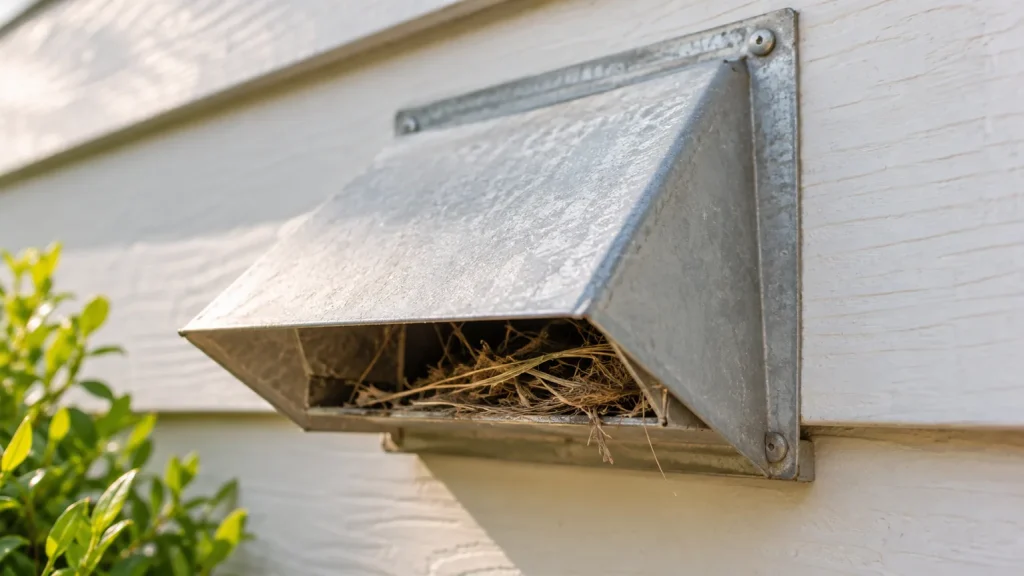
A suspected bird nest in a dryer vent is not an ordinary lint-cleaning task. The obstruction may involve occupied wildlife, concealed material and a termination that needs correction.
Do not reach into the opening or begin pulling material out. First establish what is present and arrange appropriate wildlife and exhaust-system guidance.
From ground level, note nesting material, animal activity or visible damage around the outlet. Take a photograph without approaching an elevated opening or disturbing the material.
The exterior observation cannot show the full route or whether the obstruction is occupied. Do not identify every bit of debris as a bird nest, and do not assume the line is clear because the animal is not visible at that moment.
An occupied nest can raise species-specific and local requirements. Obtain appropriate local wildlife guidance before removal rather than relying on a generic do-it-yourself instruction.
The vent-service provider also needs to understand the condition and access. Explain whether activity is ongoing, where the outlet is located and what you observed, without dismantling the termination to gather more evidence.
Do not force a brush through a suspected nest, spray chemicals into the route or block the outlet to keep animals out while the dryer remains in service.
A concealed obstruction and unfamiliar installation need an assessment. Ask for advice about appliance use while the condition is unresolved; do not run repeated cycles to test whether the material moves.
A roof or high-wall outlet should not be reached with an improvised ladder arrangement. Tell the provider the location and height so access can be planned appropriately.
Removing material at the opening may not address everything farther inside. Ask which portions of the route were assessed and whether any damage or remaining debris was found.
Keep that work distinct from wildlife removal and from installation correction. Each provider should identify what it completed so the property owner understands the remaining tasks.
If an outlet needs protection or replacement, use a solution appropriate for the equipment and applicable installation requirements. A makeshift screen or added material can create another exhaust concern.
Ask the installer to explain the proposed component and its maintenance needs. Keep a photograph and product information with the service record rather than relying on an unverified description of critter-proofing.
Document the identified issue, removal guidance, route findings and termination correction. If activity returns, use those records to assess what changed instead of repeatedly removing material without investigating access.
For non-wildlife questions about dryer vent cleaning, call Brookstown Duct Cleaning at (336) 817-0075. Explain the suspected obstruction and ask how exhaust service should be coordinated after appropriate wildlife guidance.
Avoid disturbing it and obtain appropriate wildlife identification and guidance. Arrange a separate exhaust assessment so the full route and termination can be reviewed.
Do not reach into an unknown or potentially occupied obstruction. The material, wildlife status and concealed route need to be understood before removal.
Do not use repeated operation as a removal method. Ask an appropriate provider about appliance use while the obstruction remains unresolved.
No. A brief exterior observation cannot establish occupancy. Seek appropriate identification before treating the material as ordinary debris.
Avoid improvised chemicals inside the exhaust route. They do not replace wildlife guidance, removal assessment or repair of the termination.
Do not improvise a guard. Have a suitable termination assessed against the appliance and installation requirements so protection does not introduce another restriction.
Use a suitable professional access plan. Do not climb yourself to inspect, remove material or install an unverified cover.
Not necessarily. Ask whether the connected line was assessed for remaining debris and damage, and identify any additional corrective work.
Save the identified wildlife concern, guidance received, route findings and termination details. These records help investigate recurrence.
Call (336) 817-0075 to discuss appropriate exhaust cleaning and access. Coordinate that work with the wildlife and installation tasks rather than treating them as one assumed service.
Talk to a locally owned Winston-Salem team for a clear quote and a thorough, clean job.
Understand dated NFPA dryer-fire estimates, why washer totals differ and how to use statistics without presenting historical figures as 2026…
Read More »Plan dryer vent maintenance using manufacturer guidance, laundry use, route condition and warning signs. Learn what a useful service record…
Read More »Understand dryer lint and exhaust concerns, recognize warning signs and learn why cleaning, repairs and safe appliance use all belong…
Read More »