How Often Should Commercial Air Ducts Be Cleaned?
Plan commercial duct maintenance from building use, inspection findings and a clear scope. Learn what facility managers should ask before…
Read More »
Commercial Air Duct Cleaning
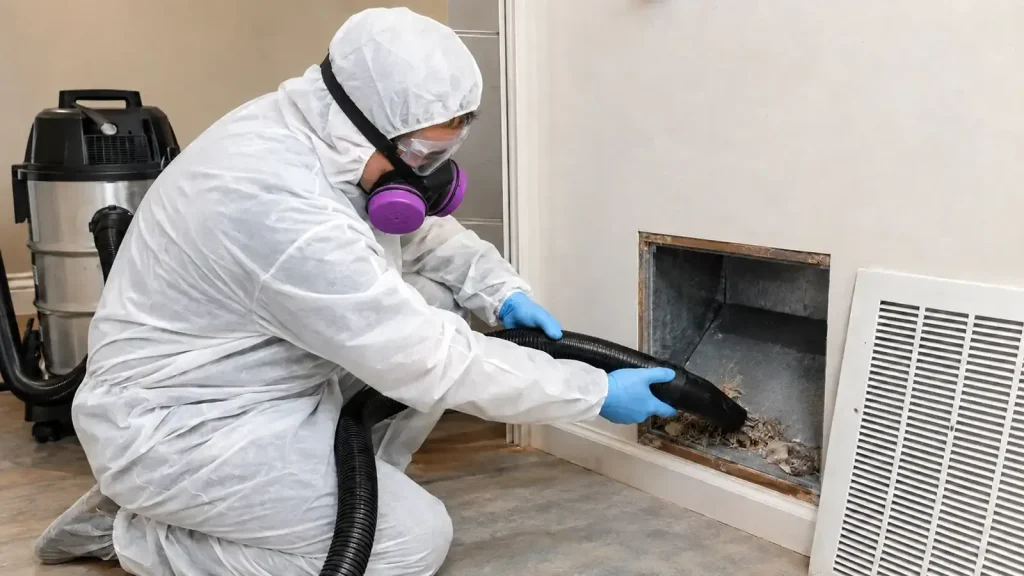
As cooler weather pushes HVAC systems from occasional use to daily heating, a past pest problem can become an air-distribution problem.
Rodents or insects may leave nesting material, droppings, urine residue, odors, damaged insulation, or entry points inside or around ductwork. Once the blower runs for longer periods, air moves through those same pathways every day.
That does not mean every property needs chemical treatment. The right response starts with confirming that pest activity has ended, correcting the access point, inspecting the HVAC system, and removing physical contamination.
Air duct sanitization after a pest infestation is a follow-up step, not the first.
Longer heating cycles can make unresolved contamination, odors, debris, or duct damage more noticeable throughout a property.
The EPA guidance on when air duct cleaning may be appropriate identifies vermin infestation as one condition that can justify considering duct cleaning. It also advises addressing the underlying causes before cleaning, so the problem does not simply return.
There is another important safety concern when rodents are involved. CDC rodent cleanup guidance advises against sweeping or vacuuming untreated rodent urine, droppings, and nesting material because those actions can put contaminated particles into the air.
If pest control is complete but you still have odors, visible debris, or uncertainty about the HVAC system, Brookstown Duct Cleaning can help you assess the next cleaning step. Call 336-817-0075 before daily heating becomes the norm.
A step-by-step response helps separate pest removal, repairs, physical cleaning, and sanitization so each problem gets the appropriate treatment.
Do not treat sanitization as pest control. If you still hear scratching, find fresh droppings, see insects near registers, or notice newly disturbed insulation, resolve active pest entry first. A qualified pest-control professional may need to inspect attics, crawlspaces, mechanical areas, wall cavities, or exterior entry points.
Rodents can damage flexible duct material, insulation, seals, and nearby components. Insects may continue entering through gaps left open after treatment.
Identify sections needing repair or replacement before cleaning. Cleaning a damaged system without correcting the entry route can allow repeat contamination.
Other conditions may also affect the scope. Renovation dust, accumulated debris, or prolonged HVAC operation can overlap with the pest issue. Understanding signs that your ducts need attention after heavy AC use can help you distinguish broader system-cleanliness concerns from the infestation itself.
Cleaning and sanitizing solve different problems. Cleaning removes dust, nesting material, loose debris, and other physical buildup. Sanitizing is a separate treatment that may follow cleaning when the contamination history supports it.
A sanitizer should not become a shortcut for removing waste or debris. Household vacuuming also has limits, especially with pest contamination. The differences between DIY air duct cleaning and professional service become particularly important when the material extends beyond accessible registers.
Sanitization makes the most sense after a specific contamination event rather than as an automatic addition to every dusty HVAC system. Pest infestation, persistent odor after cleaning, or another biological contamination concern may justify evaluating it.
Our duct sanitization process includes an initial inspection, professional duct cleaning, targeted application of an EPA-registered disinfectant, and a final review with an airflow check. Cleaning comes before treatment.
For a broader comparison of situations that may call for treatment, consider when duct sanitization is worth considering as part of your decision.
What appears around a register may be only a small part of a pest-related problem, so look for patterns that point deeper into the HVAC system.
A stale, animal-like, or unusual odor that appears when the blower starts can indicate remaining material in a duct, return cavity, or nearby building space. Odor alone cannot identify the source, so inspection should come before deodorizing or repeating treatments.
Persistent smells may also require a more source-focused approach to odor removal when debris removal alone does not resolve the problem.
Nesting fragments, droppings, insulation pieces, or unusual particles around supply and return openings deserve more attention than normal household dust.
Avoid disturbing suspected rodent waste. Document what you see and keep people away from the affected area until you know the appropriate cleanup method.
A damaged, crushed, or disconnected duct can affect airflow. If one room suddenly receives less conditioned air or a return sounds different, the issue may be structural rather than simply cleanliness-related.
Cleaning cannot correct every duct or mechanical defect. Repairs may need to happen before the system returns to normal operation.
Compare the proposed process, not simply the name of the service, because pest-related work may involve several different specialties.
Before you hire, ask five practical questions:
Be cautious when treatment is proposed before visible debris is removed, active pest activity is ignored, or someone promises a completely contaminant-free HVAC system. A sound scope distinguishes removal, cleaning, repairs, sanitization, and follow-up.
A finished job should leave you with a clear understanding of what was corrected, cleaned, treated, and what still needs attention.
Active pests should be gone. Known entry points should be addressed. Damaged duct materials should be identified for repair or replacement. Physical contamination should be removed appropriately, with any sanitizing treatment performed after cleaning rather than instead of it.
You should also understand which areas were inspected and whether any sections remained inaccessible. If odors continue, the next step may involve finding another source instead of simply repeating sanitizer application.
Across older homes, suburban communities, multi-tenant properties, mixed-use districts, commercial corridors, and renovation-heavy neighborhoods, duct layouts and access conditions vary. The cleaning scope should fit the property and contamination history.
No. The appropriate response depends on where pests traveled, whether ductwork was contaminated, and what remains after removal. Physical debris should be addressed first. Sanitization may be appropriate when the contamination history and inspection support an additional treatment.
Yes. Active pests and their access routes should be addressed before you clean the affected duct system. Otherwise, rodents or insects may return and contaminate cleaned areas again. Pest removal, exclusion, HVAC inspection, and cleaning are separate parts of the response.
Do not use an ordinary household vacuum on untreated rodent urine, droppings, or nesting material. Disturbing contaminated material can put particles into the air. Follow appropriate public-health cleanup guidance and seek qualified help when contamination is inside inaccessible ductwork.
No. Duct cleaning focuses on removing physical dust, dirt, debris, and buildup. Sanitization involves applying an appropriate disinfectant after cleaning when conditions justify it. A chemical treatment should not replace removal of nesting material, droppings, or other physical contamination.
Damaged duct material may require HVAC or duct repair rather than cleaning alone. Holes, disconnected sections, crushed ducts, or contaminated insulation can affect the response. Identify repairs before investing in repeated cleaning or sanitizing treatments.
Air movement can carry an existing odor from ductwork, return cavities, insulation, or nearby building spaces into occupied rooms. Heating operation may therefore make a hidden source easier to notice. An inspection is more useful than assuming sanitizer alone will resolve the smell.
Avoid disturbing suspected pest waste and determine whether the system contains additional contamination first. Visible material at a register can indicate a localized problem or a wider issue. Qualified pest-control, HVAC, or duct-cleaning professionals can help determine the appropriate sequence.
No. Sanitization is not a pest-exclusion method. Preventing another infestation requires identifying and addressing access points and conditions that allowed pests into the property or HVAC system. Cleaning and treatment address contamination left behind, not the cause of entry.
It can, but odor alone does not confirm contamination inside the ducts. The source may also be insulation, a wall cavity, a return-air pathway, or another nearby area. Source identification should come before repeated deodorizing or sanitizing applications.
The inspection should focus on the areas connected to the contamination concern, including accessible supply and return ductwork, registers, nearby HVAC components, damaged materials, and evidence of debris. It should also clarify whether another trade is needed for pest exclusion or repair work.
No. Commercial properties, rentals, multi-tenant buildings, mixed-use spaces, and facilities can face the same basic problem. Their HVAC systems may be larger or more complex, so access, occupied areas, system layout, and coordination with pest control or HVAC work may affect the cleaning scope.
Consider an evaluation before the system moves into regular daily operation if a recent pest infestation involved HVAC areas, visible debris, unexplained odors, damaged ducts, or uncertain contamination. Addressing those questions beforehand gives you a clearer plan for cleaning, repair, or sanitization.
Talk to a locally owned Winston-Salem team for a clear quote and a thorough, clean job.
Plan commercial duct maintenance from building use, inspection findings and a clear scope. Learn what facility managers should ask before…
Read More »You can clean a safely accessible return air vent by switching the system off using its normal controls, removing loose…
Read More »Furnace duct cleaning removes suitable deposits from the household air pathways connected to a forced-air heating system. It is different…
Read More »